

The One Resolution
Discipline. If I had to pick a new word for the new year, it’d be discipline.
Well, let’s be honest — I’d pick that word every year. It’s not because I’ve cracked the code to being disciplined, but because I keep coming back to the drawing board.
Most of the time, I’m on the right track — getting up to do what I need to do, staying consistent. Then one day, I’m tired, and I skip a day. An undisciplined day is full of “Maybe I’ll get to it,” lost time, and unnecessary late nights at work. Before I know it, one day turns into weeks, and then I have to find my way back. Even though I always do, I wonder why I fell off in the first place.
That word used to be an echo chamber for me, the guilt reverberating through me as if I were in the wrong. Today, it’s a keystone — an important base to have in my life. I no longer see discipline as a source of frustration. Instead, I understand it’s something I need for productivity and peace.
Working from home removes the structure provided by commutes and supervisors. So, it’s important that I create a new structure to replace it. I hadn’t realized how freeing up my time could easily cause me not to use it wisely.
But also, I want to say that discipline isn’t about getting it perfect every time. Think of it more as knowing you have a routine set in place to get back to — if you do find yourself falling off the wagon.
So, for you — and for me, because I need the reminder — here are 7 steps to a disciplined workday when working from home.
Working From Home, With Discipline
1. Wake Up at the Same Time
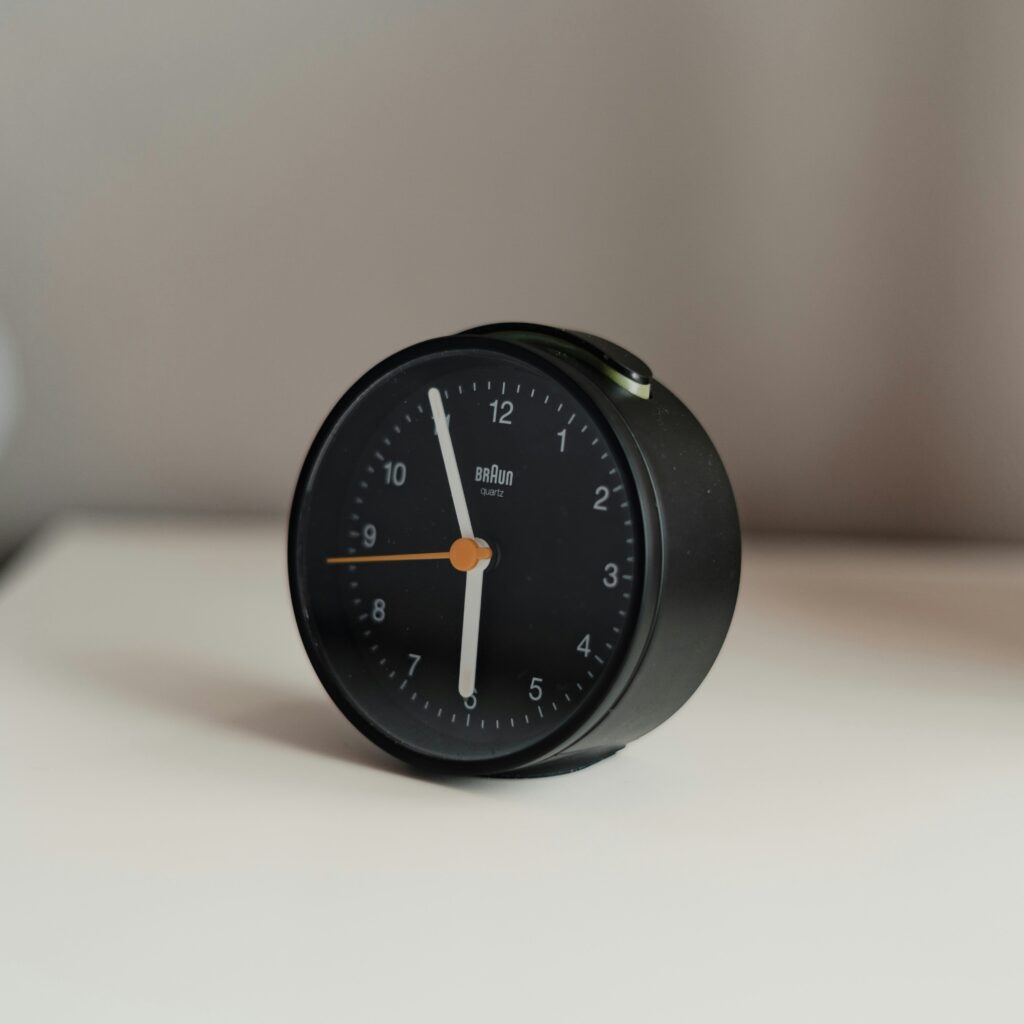
I love to have multiple alarms, just in case the first is too early and I need more sleep. However, that makes me inconsistent and groggy. Once I commit to waking up after my first alarm, I tend to cancel the other two. Being consistent mattered more than the time I woke up.
Having a set wake-up time will decrease irritability and increase alertness. As a result, you will find it easier to focus at work, and you’ll be in a brighter mood. It’s also not about how early you wake up — if your alarm is set for 10:30 am and you stick to it, you will reap the benefits.
My alarm is set to 6:00 am. I use the clock app on my phone to connect my alarm to a playlist full of upbeat music. While I turn the alarm off, I let the music play until I’m ready to get up. Three songs tend to do the trick.
2. Check In With Yourself

What’s going on in that mind this morning? Are you calm, or are you dreading the work that’s waiting for you? Either answer is fine, so long as you name them.
Knowing where you are emotionally is important, as it will help you make better decisions. For example, journaling can help you process your emotions. In addition, self-affirmations reinforce your sense of identity and reduce stress. Emotional regulation will guide you so you can start your day right.
Whenever I don’t check in with myself, I’d drag my feet in starting my day and getting to work. On some mornings, I journal when I’m anxious. Other times, I will sit quietly to feel my emotions before affirming myself. One of my favorite affirmations is reminding myself that I am capable of getting the work done — and being honest if I’m at my limit.
3. Get Your Fuel

Eat your meals. Even if you delay, don’t skip eating. Skipping meals contributes to irritation. Food is a necessity, your fuel, not a reward. Always opt in to eating, even if it’s small — it’s better than nothing.
Tasks at work won’t feel heavy or too difficult if you stop to eat first. You will also decrease brain fog and increase concentration. In addition, it reduces the urge to eat large or unhealthy meals later in the day. Pushing through hunger will not make the work easier or more accurate.
I’ll be honest. Some mornings I’ll work for the first hour, then eat breakfast. That one hour is usually the hardest. Now, I catch myself before I make any big decisions: Have I eaten? Lately, it’s been a warm bowl of oatmeal with nuts and raisins, plus an orange on the side. Whatever comes next is supported with a clear mind and a full stomach.
4. Protect Your Breaks

Hard stops for everyone, because there’s no way to earn them. Your breaks are non-negotiable, and they must be enforced. If a meeting goes over time, or a coworker steals your time, use this script:
“I have a hard stop at [Time], but I can hop back on at [Later Time].”
Take your hard stops seriously, because they won’t if you don’t. Your breaks can reduce the risk of burning out and losing focus. As you can imagine, continuing to work (or letting that coworker talk your ear off) will have the opposite effect.
I learned this the hard way. I let a client take two hours of my time once. After the call ended, I had worked through two of my breaks. Still, I had other things to finish before the day ended. Never again.
Speaking of hard stops…
5. Hard Stop Your Workday

It’s important that you close your workday tightly. Seal it with a lock that can’t be opened until your set start time tomorrow — figuratively, that is. What’s done is done.
Closing the day at the same time improves your sleep and prevents you from pondering tomorrow’s tasks. Check in with your body and notice when your focus begins to fade — it could be a sign it’s time to clock out. When I don’t close my day, I lose my nights of free time before getting ready for bed. But we need that time, otherwise we’re always working.
As a fellow ruminator, I’ve had moments when I’ve finished work but still thought about it. Now, I have three questions I answer for myself:
- What went right today?
- What needs improvement?
- What can wait until tomorrow?
Even if one more thing tries to pull me back, answering these questions saves my thoughts about work for when I’m working.
6. Plan Ahead

Whatever it is running around in your mind: write it down. Keep a sticky note or a journal just for work-related things, and write whatever you need to. Your nights should not be spent thinking about what still needs to be done on that proposal.
Closing that loop in your brain will lighten the load and reduce anxiety. You are less likely to wake up in the middle of the night due to stress, as well. It’s also a matter of trusting yourself to get it done during the next workday.
The last thing I do every evening before clocking out is replace yesterday’s notes with new ones. I often have to send reminders to coworkers and clients, so I set up scheduled messages and emails to go out in the morning. To fully log off is to have a clear mind that’s focused on dinner, whatever TV show you’re watching, or a book you want to catch up on.
7. Wind Down at the Same Time

Signal to your body that it’s time to rest. Dim the lights, quiet your space, and put on your pajamas. Your wind-down routine promotes safety in resting. When you’ve handled work with boundaries, nourishment, and notes for later, your body will stop looking for something to worry about.
Your sleep quality improves when you are consistent with winding down. Eventually, you may notice your body quieting at the same time.
For me, rest mode is at 10:00 pm. I give myself that hour to plug in my nightlights and turn on my white-noise machine. Sometimes I will choose to turn on light jazz as well.
Overall, I find this step comes easily when the other six are followed. A disciplined day gives me a quiet night.
Being Intentional With Your Time
I haven’t always been disciplined — I’m still not. However, I know what it looks and feels like. It’s being energized, feeling calm and clear, and having a sense of fulfillment.
Maybe it’s not that we need to be disciplined, but that we must practice it. Punishing or forcing yourself into discipline is unkind. See it as caring for yourself instead of bossing yourself around.
From this, I believe that discipline shows up in taking improved actions. It’s never caused by doing more, but by making good choices every day.
Have a cozy workday, dear.